The Lady of Pristava was the famous Duchess Viridis Visconti from Milan. She was one of the first children of Bernabò Visconti and Beatrice Regina della Scala. She is primarily known for being the wife of Leopold III, Duke of Austria and the benefactor of the Stična Monastery. She spent her last years at Pristava nad Stično.

She was born into the family of the Lord of Milan and spent her free time reading the poems composed by her countrymen. She especially liked Petrarch. In addition to spending her free time engaged in study, she also helped design the flag.

The flag served as a recognisable symbol of the Milanese army. The coat of arms of Milan is embroidered with the image of a serpent swallowing a frightened child. On top of the image is the Lombardy iron crown. Bernabò Visconti proudly allowed his daughter to hand the flag over to the men going into battle. Visconti’s army did not seek a confrontation, but they were determined to defend Milan and the other provinces. To this day, the coat of arms remains a recognisable symbol of the Visconti family.

The emissary of the Austrian Duke Rudolph came to Milan with an important suggestion. In his letter, the Austrian Duke asked Bernabò to marry off his daughter Viridis to his brother Leopold III. However, Leopold III was not the only suitor. Viridis was also courted by the illustrious condottiero Ambrosio Sforza from Milan. Viridis became the wife of Leopold III who was just 14 years old at the time. She was unhappy for the first couple of years at the Austrian court. She wrote letters home speaking of her unhappiness, which nevertheless hid some of the details. She didn’t speak German and was unaccustomed to the less lavish manor in which they lived. They were treated as children, which in reality they were. His older brother, Albert the Pigtail, on the other hand, spared no expense and had many servants. Viridis was not used to being ignored and having to adapt. The lords met in a large chamber where they whiled away the hours working and chatting. Viridis was not particularly talkative when working.
When Leopold came of age, the bad times where behind them. Viridis and Leopold became popular with their subjects and other citizens. They soon came to rule the land. They desired more and more – an abundance of land and castles. They were successful at negotiating and gained significant power. Leopold worked alongside his brother and together they expanded their estates to Tyrol. Leopold wished to prove to the people that he was a hero. He proved his gallantry in combat, earning the title of knight. Among others, he conquered the following lands: Styria, Carinthia, Carniola, the Windic March, Istria, Felte, Cividale, Tyrol, the Duchy of Habsburg, a border duchy and several smaller regions. Leopold conquered land after land, making Viridis proud and humiliating his sister-in-law. This of course earned him many enemies. Leopold bought expensive castles for Viridis and offered her the most extensive lands. Viridis supported him. She gave him courage and strength, as well as the offer of counsel when it came to conquering lands and fighting battles.

Viridis and Leopold had four children: William, Leopold, Ernest the Iron and Frederick. Their progeny had a religious upbringing and were schooled to comport themselves likes dukes. Virids sought a wife for her firstborn, with an eye on the benefits a marriage would bring. Viridis wanted to become an empress and the mother of kings. This would allow her to show everyone her glory and what a successful wife and mother she had become.

Leopold and Viridis entrusted the upbringing of their sons to the peasant priest Peter. It was a well known fact that people of peasant stock had great difficulty in rising up to the rank of courtier. Peter was unusually clever and was ordained a priest at the Stična Monastery. He became a teacher and a role model to two of the sons at the Austrian court. However, Peter was soon forced to leave the Austrian court. Viridis felt her sons had become estranged and she blamed the priest’s education. He went to the Stična Monastery.

When warring with the Swiss for their land, the army discovered Leopold’s battle plan. They tricked his forces into coming to the valley where the thirty-seven-year-old Leopold died in the battle for the Swiss city of Luzern. Viridis then went through some troubled times. She was deeply affected by her husband’s death. She found herself with no one to support her. Her sons helped. The eldest of Viridis’ sons was still too young to take power, which is why Leopold’s brother Albert reigned in his stead. Albert also took care of his nephews and brought them to court. Viridis remained alone in Graz. With each passing day, she turned more and more to God and prayer. She contacted Peter, the monk from the Stična Monastery. She repented for her behaviour when he was their guest. The monk told Viridis about a hunting manor close to the monastery. Herman, the Count of Celje, bought the marvellous little castle for Viridis. Viridis spent the rest of her life at the hunting manor or Pristava. She was mourned at the Church of St. Lambert. She was then buried in a tomb in Sittich (Stična) a few days before Epiphany in 1407 (or 1415). She left all of her worldly belongings to the Stična Monastery.

Today, the place is known as Pristava. The castle at Pristava no longer stands; however, historical records serve to remind us of Viridis Visconti, the noble Lady of the Manor. We remember her with pride and often speak of her. The Church of St. Lambert still stands on the hill. The church has a memorial plaque honouring Viridis Visconti. It was placed there to celebrate the 600th anniversary of her death.

Mateja Okorn; summary taken from the book “Gospa s pristave” (The Lady of the Manor) by Janežič-Kraljev Ivan.

You are welcome in our pristine nature! We look forward to your visit.

Read more on our blog

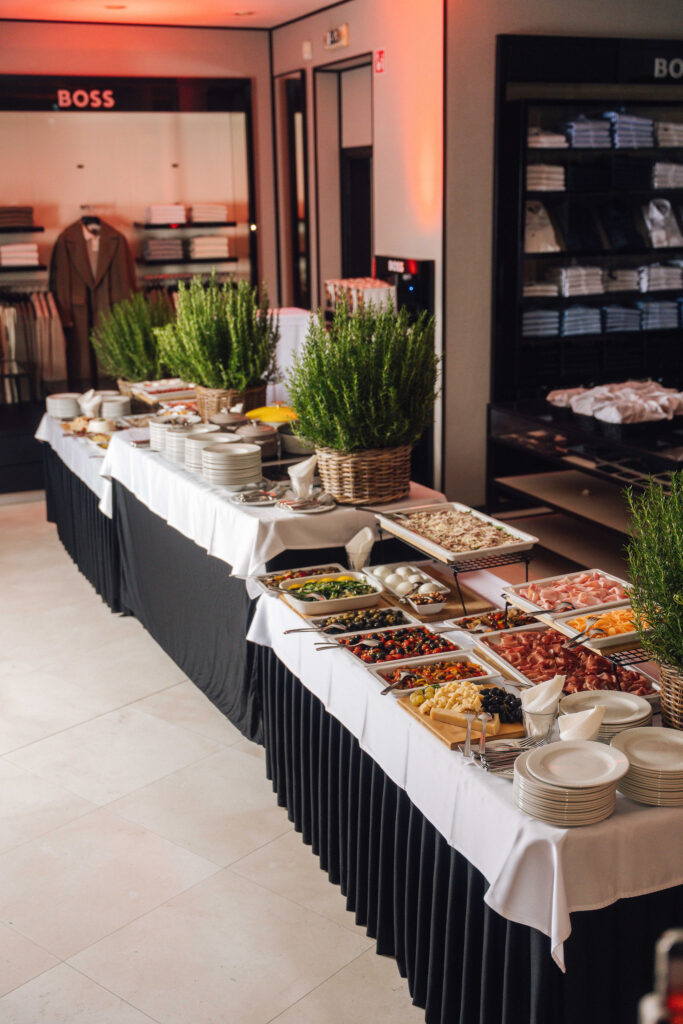
catering Delicije hladno-topli bife
Corporate Events in Nature – Pristava nad StičnoA Corporate EventNEWS

Corporate Events in Nature – Pristava nad Stično

The development of successful products and services is always the…
March 12, 2026
poslovni dogodek v naravi Pristava Slovenija
Wedding venue SloveniaWedding in nature

Wedding venue Slovenia

For most couples, the wedding planning journey begins online. A…
February 6, 2026
civilna poroka, poroka v naravi
Wedding Trends 2026NEWSWedding in nature

Wedding Trends 2026

A Boutique Outdoor Wedding Venue in Slovenia The year 2025…
January 21, 2026
poslovni dogodek v naravi Pristava Slovenija
Business Events in an Environment that Connects You with NatureNEWS

Business Events in an Environment that Connects You with Nature

At the Park of Turistična vas Pristava, we have created…
October 6, 2025
Poročni šotor za najem
Outdoor Wedding in SloveniaWedding in nature

Outdoor Wedding in Slovenia

Are you dreaming of an outdoor wedding in Slovenia, surrounded…
July 25, 2025
The Way of the CisterciansArhiv

The Way of the Cistercians

The Cistercian Way (Way of Cistercians) is a more than…
September 20, 2023
More posts

Sign up for the newsletter!

Turistična Vas Pristava

Borut Žaren s.p.
Pristava nad Stično 4
SI-1295 Ivančna Gorica
EU-Slovenia
GENERAL INFORMATION
PR’ OKORNU FARM

Turistična Vas Pristava

Borut Žaren s.p.
Pristava nad Stično 4
SI-1295 Ivančna Gorica
EU-Slovenia
GENERAL INFORMATION
PR’ OKORNU FARM

Turistična Vas Pristava

Borut Žaren s.p.
Pristava nad Stično 4
SI-1295 Ivančna Gorica
EU-Slovenia
GENERAL INFORMATION
PR’ OKORNU FARM